
Timor-Leste
Challenges abound, but women are striding forward in one of the world’s smallest countries
Timor-Leste (East Timor) is one of the world’s youngest countries. After centuries of Portuguese colonial rule, Timor-Leste achieved a 9-day period of independence before being newly invaded by neighbouring Indonesia in 1975. In 2002 Timor-Leste claimed its independence once and for all.
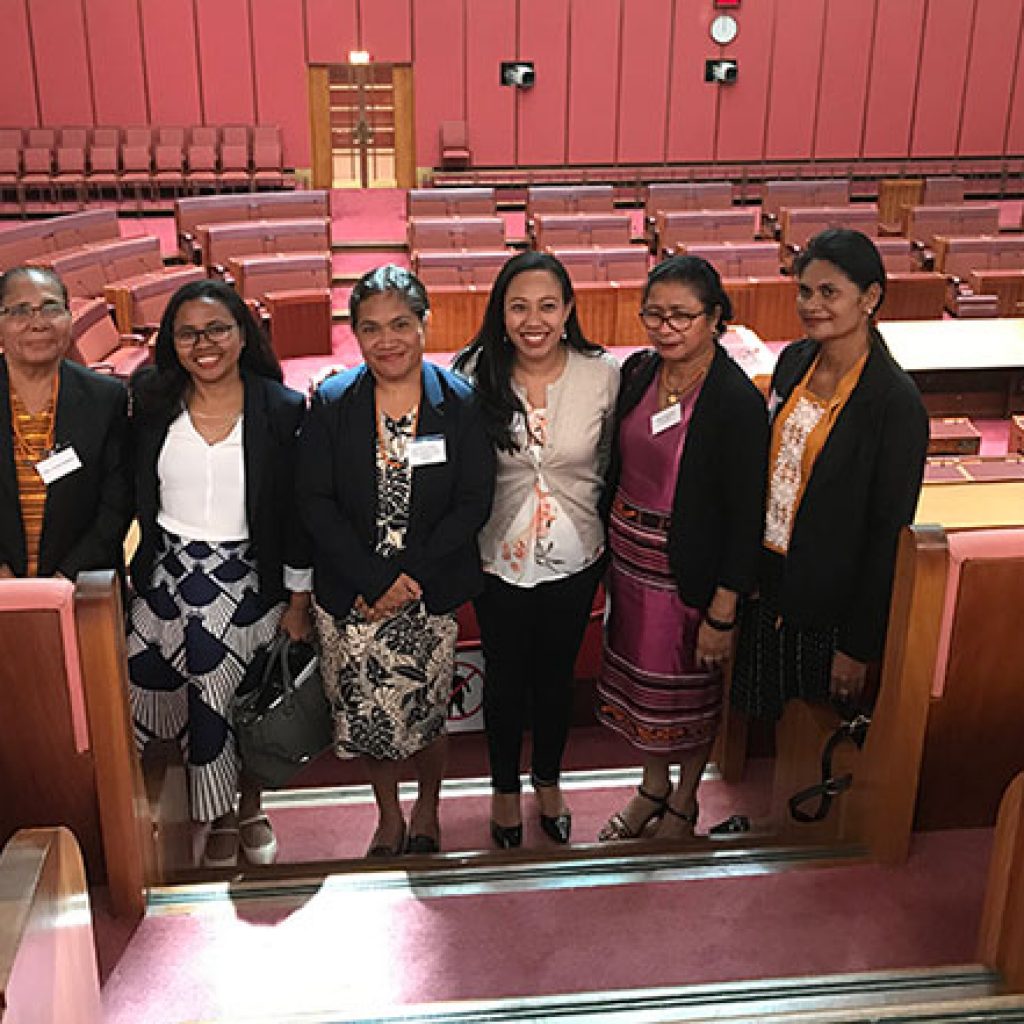
Women’s rights organisations and activists have been made vital contributions to Timor-Leste’s progress since independence. A key victory was legislating electoral quotas for women in parliament – as a result, Timor-Leste has one of the highest percentages of female parliamentarians in Asia, currently around 35%. Despite this progress, gender inequality persists. Women, girls and gender-diverse people face with high rates of gender-based violence and significant barriers to education, employment and equal pay, especially in rural areas. Human trafficking is a critical concern, as Timor-Leste continues to be a source, transit and destination country.
People with disability in Timor-Leste face discrimination, stigma and exclusion, with limited access to education, employment, health services and public facilities. Timor-Leste does not criminalise same-sex relations, and LGBTQIA+ organisations are allowed to operate. However, there are no non‑discrimination laws based on sexual orientation or gender identity, and violence towards LGBTQIA+ people is prevalent.
Timor-Leste is highly vulnerable to climate change and is one of the most at-risk countries in Asia. Most people are reliant on subsistence agriculture and live in coastal areas. Livelihoods, water and food security are increasingly threatened by irregular rainfall, longer dry seasons, extreme weather events, and deforestation.
Life for women in Timor-Leste
Women and girls face challenging circumstances in Timor-Leste. Women face greater barriers to employment than men and are paid less for the same work. They are overrepresented in the informal sector and are more likely to be in casual or unstable employment than men.
Alarming rates of gender-based violence persist. A 2015 study found that 59% of girls and women between the ages of 15 to 49 experienced physical or sexual violence by their partners. Women, especially in rural areas, face cultural, economic and logistical barriers to accessing justice. Women and girls who do manage to report cases of violence face long delays and poor sentencing due to under-resourced law enforcement and judicial institutions.
While women’s representation in parliament is world leading at 35%, due to electoral quotas, these initiatives have been slow to shift stubborn barriers to women’s empowerment at the local and rural level. In 2016 a new village-level election law started to address this, leading the number of women Village Chiefs doubling in the 2016 election. This number decreased from 21 to 18 Village Chiefs in 2023, which illustrates that progress is not always linear, and that local women’s rights organisations are needed more than ever to maintain gender equality gains.
BARRIERS TO EQUALITY
4%
Local government seats are held by women
59%
Women in relationships have experienced intimate partner violence
80%
Women are not paid for their work (compared with 33% of men)

Quick stats
1.4 million
Total Population
28.7
Income inequality, Gini coefficient
42%
Population living below the national poverty line
Partnering for change

Promoting women’s leadership
To ignite true change, women must be included in decision-making in their local communities. The decisions made at the community level can have profound impact on women’s lives. Covalima Community Centre (CCC) is an IWDA partner with a long track record of supporting emerging women leaders to break the barriers holding them back in Covalima district. The leader of one of CCC-supported women’s groups stood as a candidate and became one of Timor Leste’s few women Village Chiefs.

Strengthening women’s safety and security
In Timor-Leste nearly 40% of all women aged 15 years and older, and 60% of women in relationships experience violence. While the country introduced a new law against domestic violence in 2010, few women and men are aware of it. Our partner ALFeLa is working to change this, providing legal advice and information to help women and men understand their rights and obligations under the law, and empowering women and their children to leave unsafe relationships and life-threatening situations.
Economic empowerment
Most women in Timor-Leste are excluded from the formal workforce and do not have the chance to earn a stable income. Our partner Covalima Community Centre (CCC) connects women with new ideas and markets for their produce, helping to create sustainable businesses and pursue collective action on women’s priorities and needs. CCC’s work to empower women leaders and helps ensure women’s economic needs and priorities get heard when decisions on resource-distribution are being made at the village level.
IWDA partners