
Fiji
Operating in a complex post-military environment, Fiji is home to a thriving feminist hub
The legacy of military rule continues to dominate Fiji’s social and political systems, creating a significant barrier to women’s full engagement in civic life.
Fiji is a diverse country; gender, caste, location and ethnicity can have powerful impacts on access to education, employment, safety and representation. The contributions of Fijian women are significant, yet often remain at the informal or community level. Women’s access to formal politics is hampered by gendered role divisions which are common across the Pacific.
Despite a sizeable agricultural industry, and growing tourism opportunities, one in three Fijians live below the national poverty line of AUD$3.30 a day. IWDA’s own deprivation research program, Equality Insights, found substantial effects of gender, urban/rural location, age, disability, and ethnicity on multidimensional deprivation in Fiji.
Fiji is already responding to the changing global climate. Cyclones such as Ella and Winston, combined with rising sea levels present new and urgent challenges in the 21st century. The increase in natural disasters and environmental insecurity in the Pacific creates an urgent need for women’s leadership across Fiji. Women play an essential role in supporting communities affected by crises. They understand local priorities, needs, realities and provide a vital voice for communities across the country.
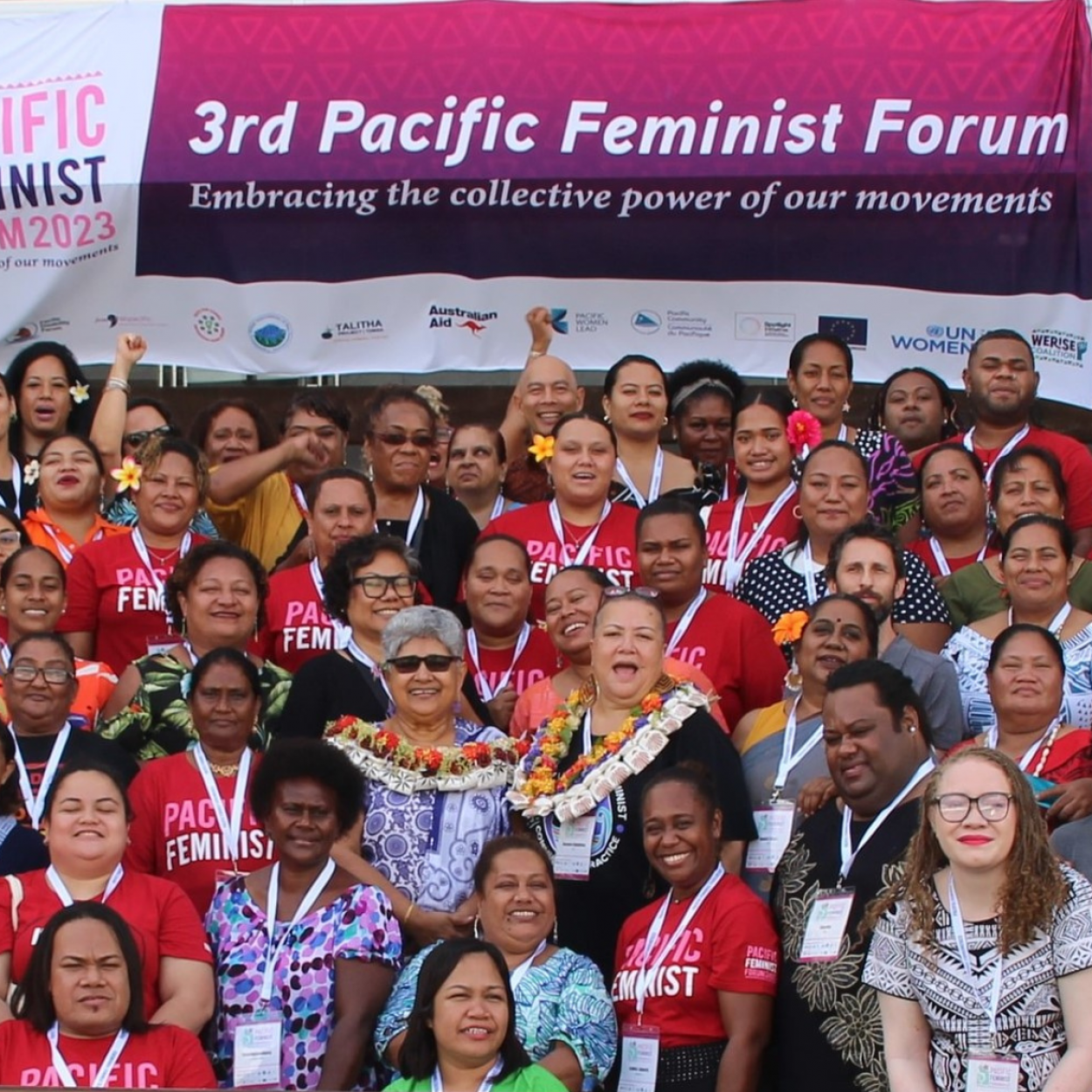
Fiji is fast becoming the vibrant capital of diverse Pacific feminism with thought leaders, including our partners, championing innovative and impactful programs to improve opportunities for women and girls in Fiji, and the Pacific region more widely.
Life for women in Fiji
Fijian women make significant contributions to the country, but are largely excluded from formal places of power. Much of women’s labour remains unrecognised and unrewarded, just 41% participate in the formal labour market, compared to 81% of men. Customary traditions compound this economic hardship, with traditions favouring men’s rights to property and inheritance over women’s.
Across the country, women face higher rates of violence and discrimination, and fewer opportunities than their male counterparts.
Barriers to equality
10.9%
National parliament seats held by women
64%
Women have experienced intimate partner violence
38%
Women's earnings are just 38% of men's

Quick stats
929,766
Total Population
30.7
Income inequality, Gini coefficient
35%
Living below National Poverty Line
Partnering for change
In Fiji, IWDA partners with two women’s rights organisations: FemLINKpacific and the Fiji Women’s Rights Movement. Both organisations are also members of the We Rise Coalition.
At the centre of the We Rise Coalition is a commitment to building and sustaining the collective power of women in all their diversities. This includes building a movement to demand that women are able to realise their full human rights, equality and justice, and creating a political force for change that cannot be ignored by families, communities, governments, or society at large.
IWDA partners in Fiji