
Beyond the weather report: Women leading on climate action in Fiji
“Thank you for listening to FemTalk 89FM Radio, by and about women in the community.”
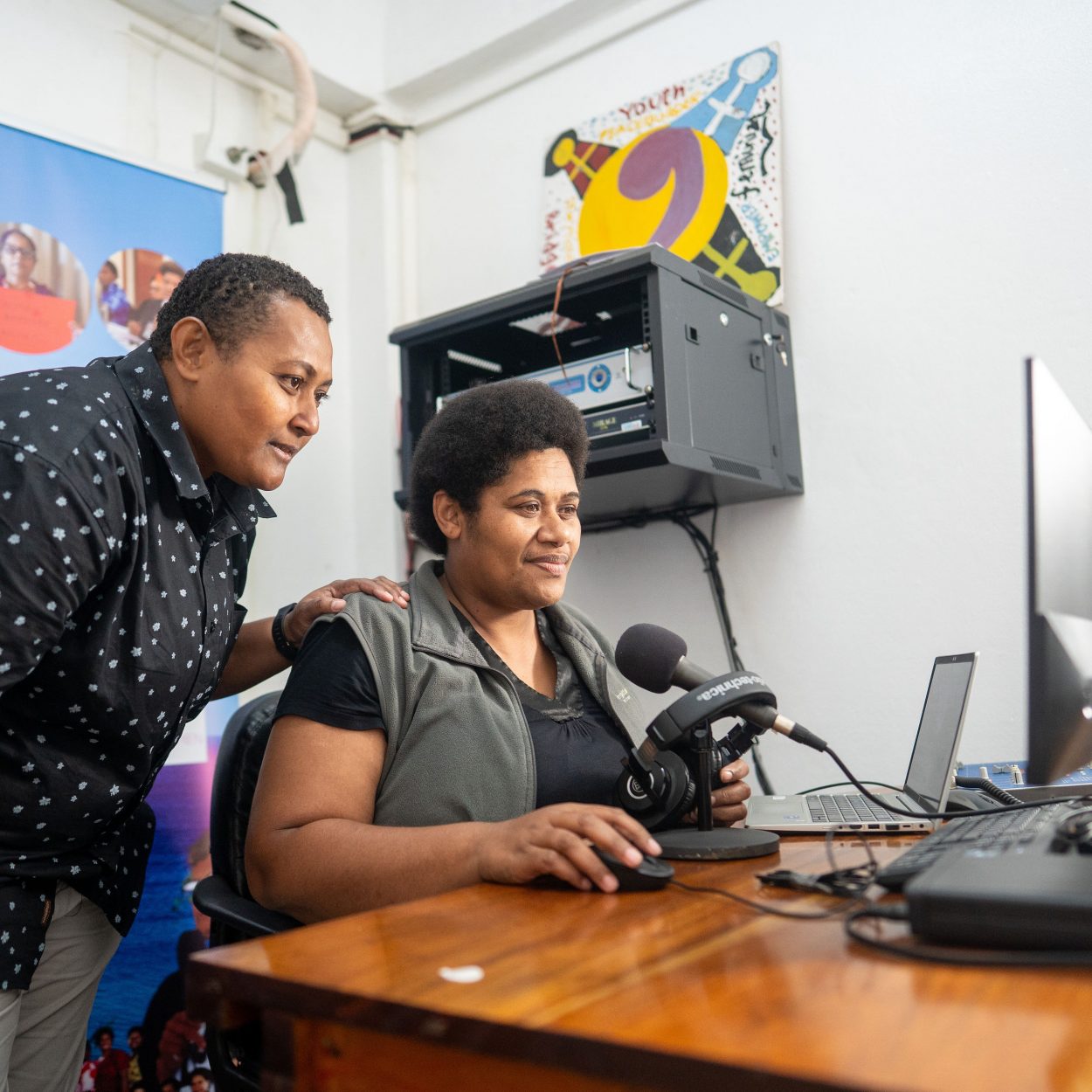
This voice belongs to Bulou Joana, a broadcaster with femLINKpacific’s Women’s Weather Watch network. Once the general news and community updates are covered, her broadcast turns practical: weather conditions, possible showers and thunderstorms, high and low tides, sunset and sunrise.
It may sound like a routine weather report, but for women living across Fiji’s islands, it can be vital information to act on.
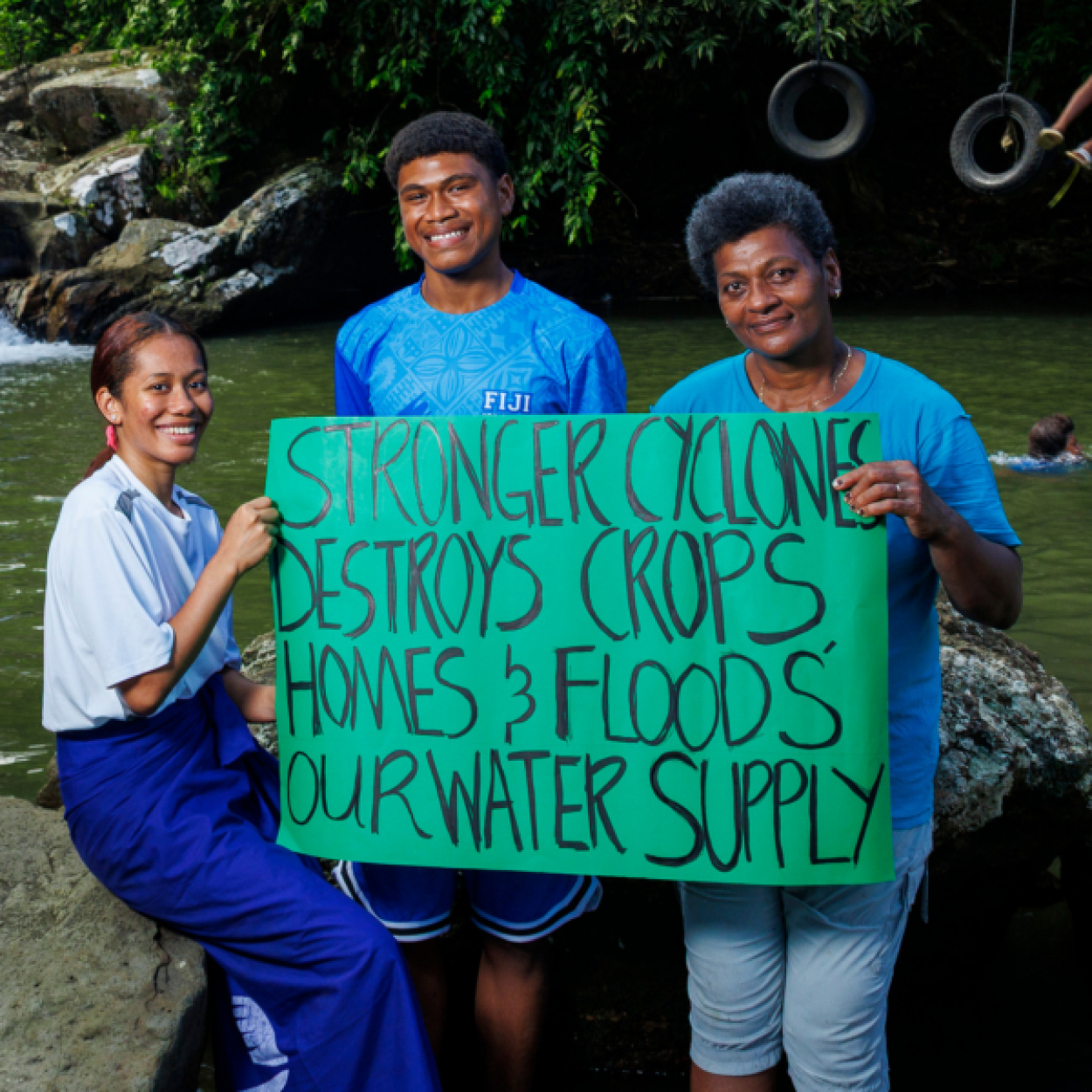
As temperatures continue to rise globally, the climate crisis is already reshaping life in Fiji. Vunidogoloa, a low-lying coastal village in the country, was one of the first communities in the world forced to relocate to higher ground because of rising sea-levels. As of 2024, six villages in total had been relocated with a further 50 marked for possible relocation over the next decade.
For communities living every day with these risks, knowing what is happening on the ground – and knowing it quickly – can be critical.
A women-led weather network
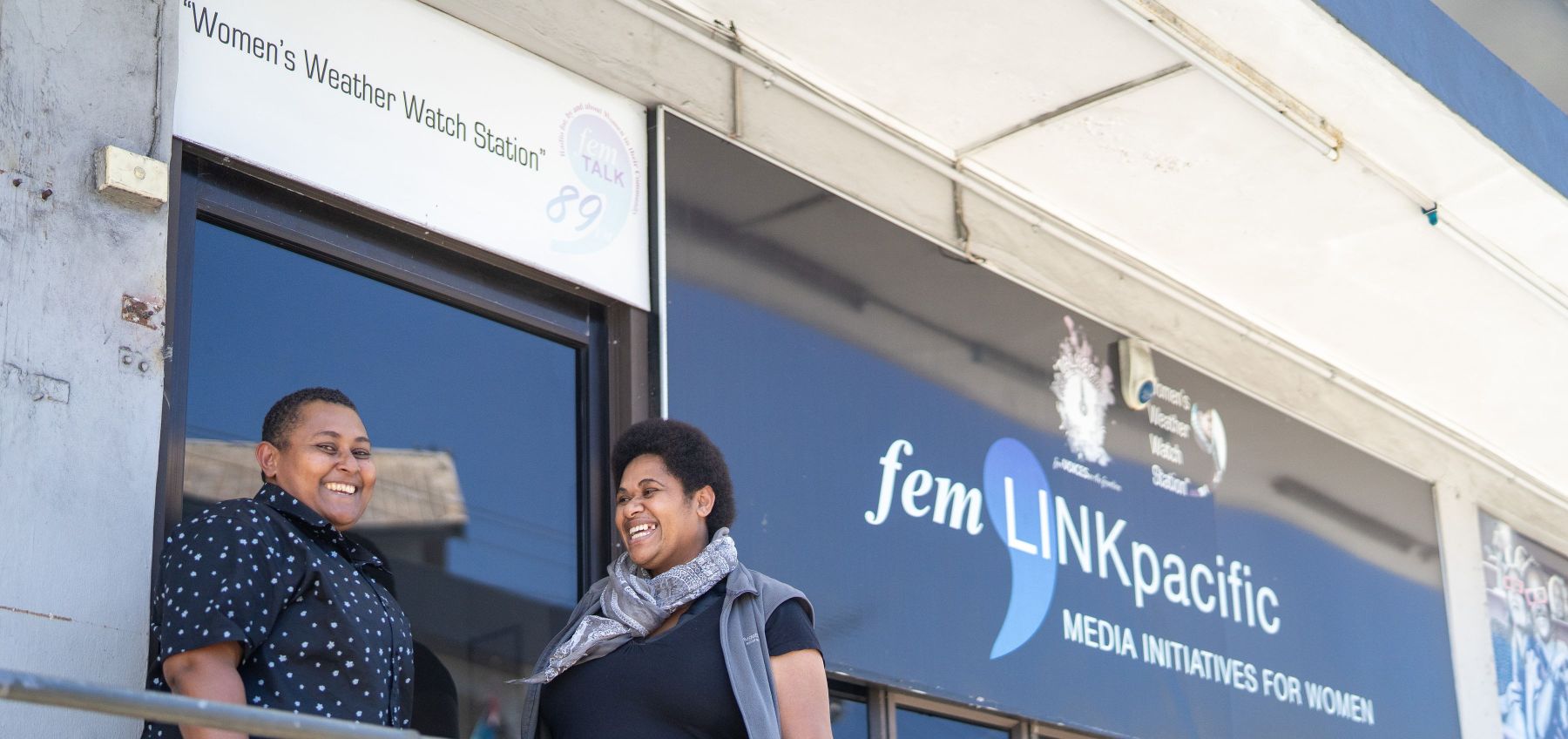
This is where femLINKpacific comes in. Since 2004, their Women’s Weather Watch (WWW) network has transformed how women experience climate events. What began as a simple system of SMS alerts has grown into a thriving network connecting rural women leaders across Fiji. Through text messages and footage captured on their phones, the network enables women to share real-time weather updates and send early warning signals on evolving natural events. The updates not only support communities to prepare for possible disasters, they also become part of a growing documentation of women’s lived realities through them.
From their media centre in Suva, network members’ messages can also be turned into real-time situation updates by femLINKpacific’s broadcasters, supplementing information provided by the Fiji Met Office with what women are seeing in their communities. With their phones, the network is able to capture something ordinary weather bulletins simply can’t: what a storm actually looks and feels like on the ground.
For femLINKpacific, the idea is simple: women on the ground are often the first to notice changes and have first-hand knowledge of what their communities need during and after a disaster – now, they also have the network to make that knowledge travel.
Turning local knowledge into action
Official weather reports can sometimes be technical and difficult to translate into real-life decisions for the average listener. That’s why femLINKpacific’s community radio broadcasts also focus on turning technical cyclone categories into practical, everyday language: what the winds might do, at what point might trees begin to fall, what stage of flooding means it’s time to prepare to move.
To further support communities to respond, their broadcasts also share practical tips on preparing for things like relocation or what to include in relief supplies, including essentials that more general instructions might not consider such as sanitary pads. These details matter because when women are at the centre of disaster preparedness, their knowledge and lived experiences can inform and shape how communities respond – ensuring no one’s needs are overlooked when it matters most.
A woman’s story builds a seawall
Through local grants, femLINKpacific is also helping turn women’s experiences of the climate crisis into action. In Yadua, Sigatoka, women have witnessed changes to their community, including eroding shorelines and impacts on fishing and subsistence living.
For years, the village had been seeking support to build a seawall after repeated damage from tidal waves. When femLINKPacific put out a call for grants for women affected by disasters and climate change, Keresi Tamani, a local woman living with a disability in the village shared her experience through the network. She told femLINKpacific that water had almost reached the village and that six tidal waves had swept through the community.
By sharing her experience, Keresi helped bring her community’s situation to wider attention, and femLINKpacific was able to secure funding to support the seawall project. When the initial funding was not enough, femLINKpacific sought additional support and connected her with local government, where she was also able to access further funds.
The community is now looking towards the completion of a new 175-metre seawall. The project has also created employment for community members involved in bringing stones for construction.
For Keresi, climate action is about protecting the people around her. “Women in the community know the solutions to climate change,” she said. “We are standing strong, ready to face the biggest problems we have.”
Left: Keresi Tamani. Photo credit Zoom Fiji
Women are already leading climate action
This is what women’s climate leadership can look like: not just a speech at a global summit, but a phone recording the wind, a photograph of floodwater, a voice translating a warning, or a woman insisting that her community’s experience be heard.
These women are using their own knowledge, networks and lived experience to protect their communities. They are not waiting to be given a role in climate action. They are already leading it.
What they need is for that leadership to be recognised, supported and resourced. When women’s voices are heard and their solutions are backed, local knowledge can become climate action, and communities can become stronger in the face of what comes next.
femLINKpacific Women’s Weather Watch is funded by Department of Foreign Affairs and Trade (DFAT) through the We Rise 4 program as well as Women’s Fund Fiji and UN Women.
Banner and in-text image: Women’s Weather Watch broadcasters Bulou Joana (right) and Alumita Davelevu (Left) from femLINKpacific. Photo by Elle Leontiev.