
Gender and climate change: What are the links and why do they matter?
When you think back to the 2020 Black Summer bushfires in Australia, what comes to your mind? For many of us, it’s images that have stayed seared into our memories: blackened skies, exhausted firefighters and convoys of trucks rolling in to rebuild. But behind those highly visible recovery efforts were quieter stories of care, resilience and survival that rarely made headlines.
Take BlazeAid, one of Australia’s best-known disaster recovery organisations, famous for rebuilding thousands of kilometres of farm fences after fires. Its public face was co-founder Kevin Butler but as his own daughter tells it, the force behind it was really his wife, Rhonda. She pushed for it to happen and worked tirelessly behind the scenes to keep hundreds of volunteers and more than twenty camps running during that summer. Women like Rhonda were everywhere in the bushfire recovery: organising, feeding, fundraising, coordinating, holding communities together. Yet their work sat largely outside the spotlight – and outside the recognition and decision making that followed.
The social impacts of climate change
Climate change is usually framed as an environmental story. One about rising temperatures, uncontrollable bushfires and melting ice caps. But beyond the environmental impacts, it’s also a story about social justice, because the impacts of climate change often land along the fault lines of inequality that already run through our societies.
One disaster, very different outcomes for women and girls
How well you can prepare for a crisis, stay safe through it, and recover afterwards will depend on your level of access to things like income, housing, healthcare, information or transport. Because of the unequal share of power in our society, access to all of these is often shaped by gender, race, disability, class, age and where you live. That means that for the most marginalised among us, including First Nations people, migrants, people with disabilities, LGBTQIA+ people, or people living in rural areas, the impacts of a disaster will be felt more acutely. It’s one of those cruel ironies of the climate crisis: the communities that have contributed least to it are often the ones hit hardest.
That’s why climate change is often described as a risk multiplier. It doesn’t create inequality out of nowhere; it takes the inequalities that already exists and turns up the dial on them.
Here’s what that looks like in practice…
Care work grows, and it’s women who absorb it:
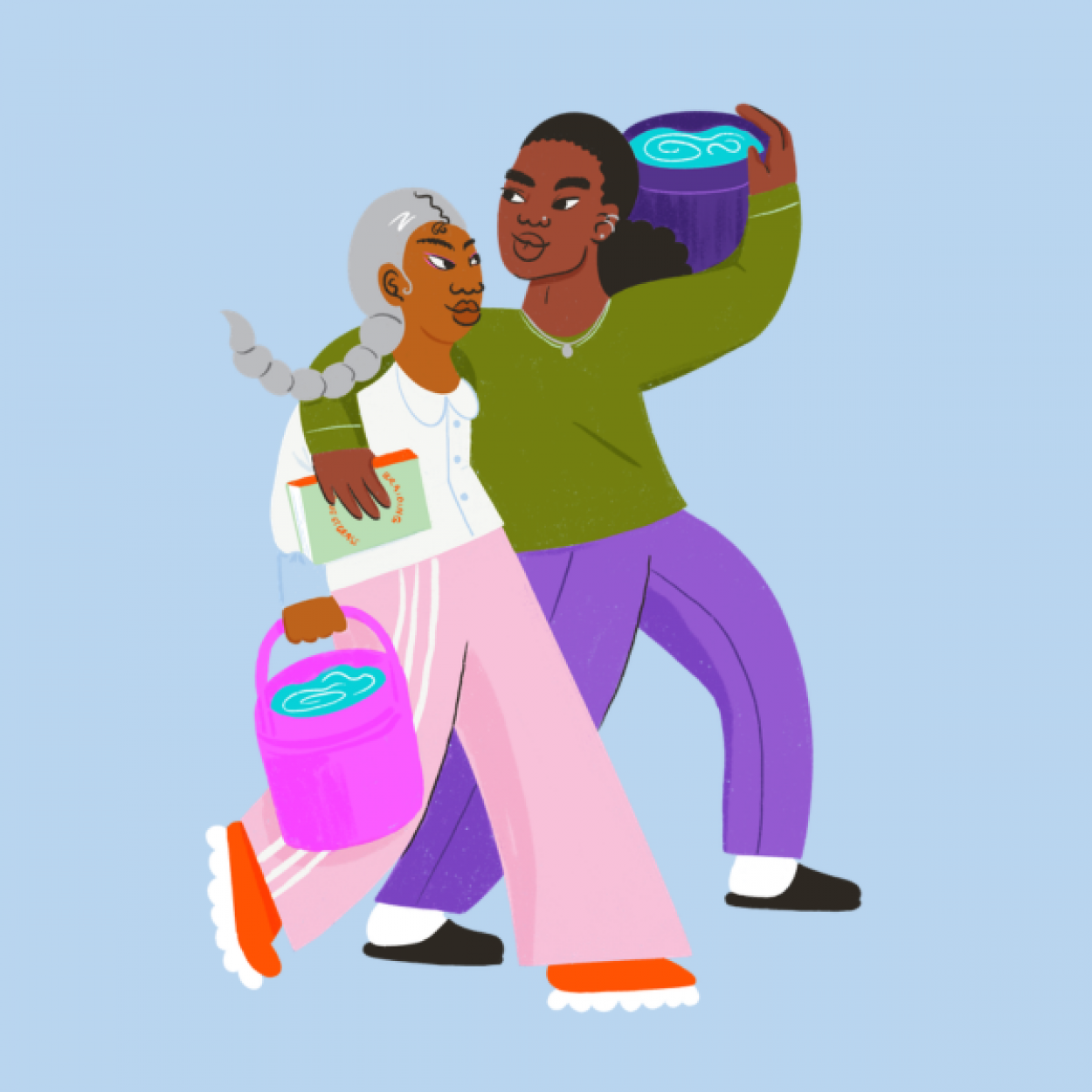
Care work is the invisible infrastructure that keeps a community running. It’s how people get fed, raised, nursed and supported through a crisis, and no economy or disaster recovery can function without it. Yet this essential work isn’t shared equally: women and girls already do the majority of the world’s unpaid care work, whether that’s collecting water and fuel, preparing food or looking after children, older people, and family members who are unwell. When drought dries up a local water source, someone has to walk further put to find water – and because of traditional gender norms, that person is often a woman.
This plays out much closer to home, too. When the 2022 floods devastated Lismore and the Northern Rivers, it was overwhelmingly women who ran the evacuation centres and community hubs, organised donations and checked in on isolated neighbours – all on top of their existing caring loads. Three years on and women still make up most of region’s community resilience groups, quietly preparing for the next disaster.
Livelihoods on the frontline:
In Australia, women make up around a third of our agricultural workforce and contribute nearly half of a commercial farm’s income once their on-farm, off–farm and household work is counted. During droughts, it’s often women’s off-farm income that keeps the family afloat. Yet women are still routinely passed over when it comes to resource sharing. They are less likely to own land, or to have access to finance, technology, insurance or government support. So, when disaster strikes, women often lose more and have fewer resources to adapt or rebuild.
Violence and health risks rise:
Displacement, financial stress and disrupted services all increase the risk of gender-based violence – a pattern that’s been documented after disasters around the world, including here in Australia. Analysis from the UN’s spotlight initiative suggests that in a 2’C warming scenario, around 4 million more women each year could experience intimate partner violence. At the same time, access to sexual and reproductive health care can fall away just when it’s needed most as clinics are damaged, supply chains break down, and emergency responses often overlook women’s specific health needs. That word ‘overlook’ is worth pausing on. Emergency plans don’t miss women’s needs by accident; they reflect who was in the room when those plans were written. When disaster responses, health systems and recovery funding are designed largely without women at the table, the gaps fall exactly where you’d expect them to.
Women and climate change: it’s not vulnerability, it’s inequality
Here’s the crucial thing: none of this happens because women are somehow naturally more vulnerable. These impacts are produced by systems that distributed power, resources, responsibilities and opportunities unequally.
Gender norms decide who is expected to do the care work, and whose work counts as ‘real’ work.
Law and customs shape who owns land and who can access credit.
Institutions decide whose voices are in the room when emergency plans are written and whose needs those plans are built around.
And gender never operates alone. First Nations women, women with disabilities, LGBTQIA+ people, women living in poverty, and those in remote or climate-exposed communities can face multiple, overlapping barriers at once. Understanding climate impacts means understanding how these systems intersect and building responses accordingly, instead of treating women as one uniform group.

Women aren’t waiting to be included, they are already leading climate change solutions
If the systems that create vulnerability were built by people, they can also be rebuilt. And women are already doing exactly that.
Around the world, women are leading climate action as farmers, scientists, community organisers, Indigenous knowledge holders, policymakers and advocates. They hold deep, practical knowledge about local ecosystem, food production and what their communities actually need.
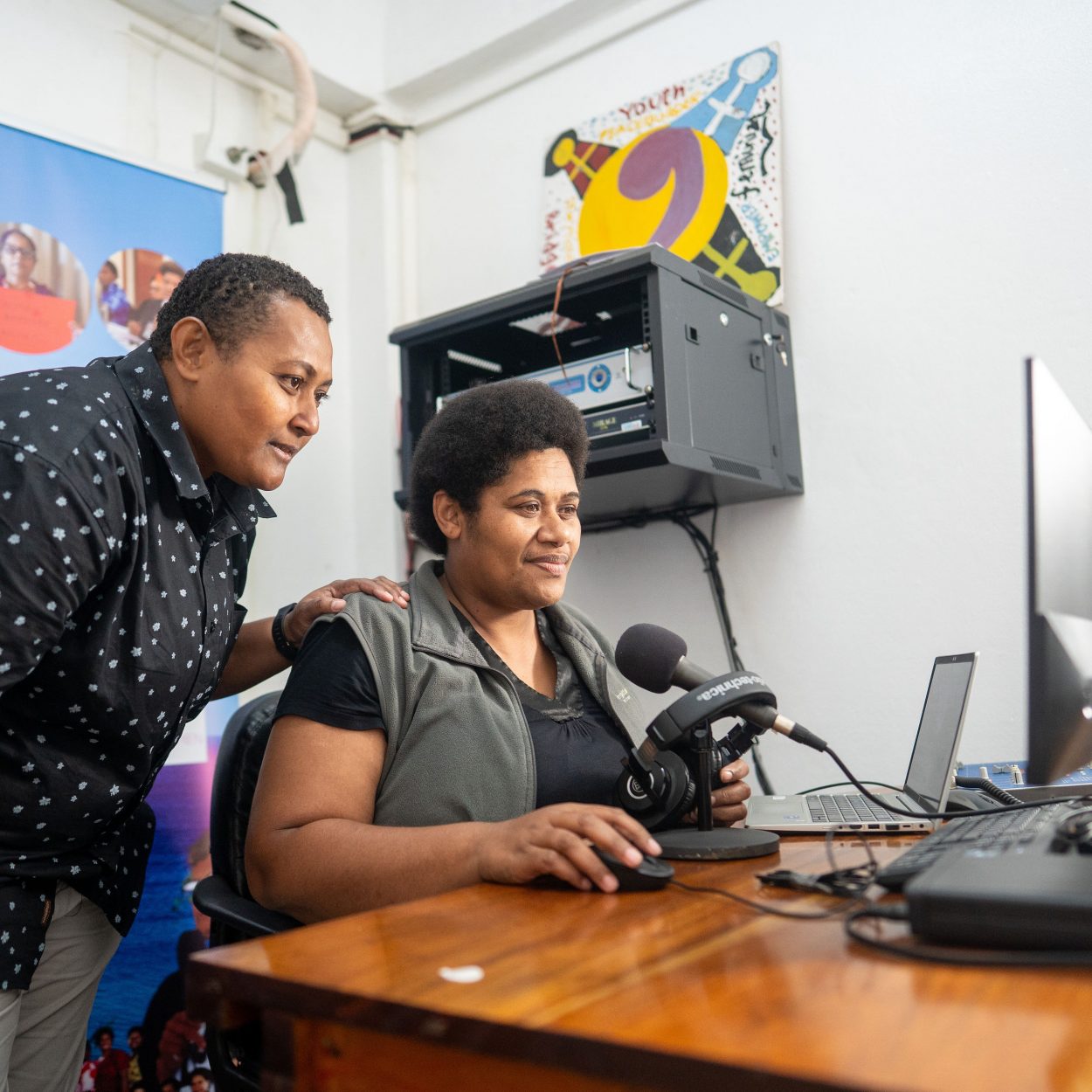
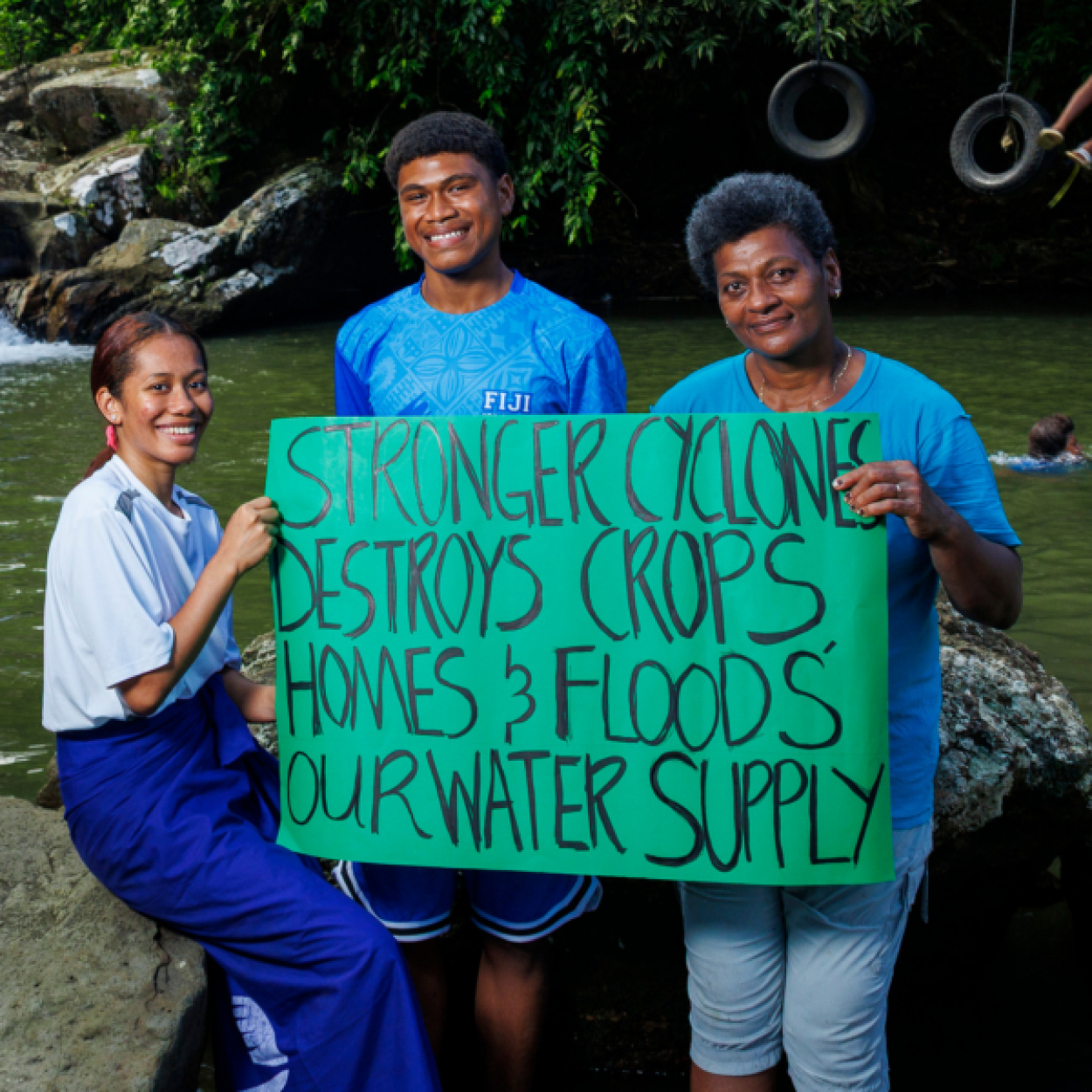
Let’s take IWDA’S long-time partner femLINKPpacific, a feminist media and broadcasting organisation in Fiji. Their Women’s Weather Watch turns rural women – who so often are the last to leave home in a cyclone and the first to respond after it – into a nationwide early warning and communication network. It’s a powerful glimpse of what happens when women lead climate response.
But here’s the disconnect: the people with the most relevant knowledge are also the least represented where climate decisions get made. Women remain dramatically underrepresented in the rooms where climate policy is written, funding priorities are set and emergency responses are designed globally, with around two-thirds of climate decision-making roles held by men.
Left Image: Women’s Weather Watch broadcasters Bulou Joana (right) and Alumita Davelevu (Left) from femLINKpacific. Photo by Elle Leontiev.


Feminist climate justice means changing the system, not just naming the problem
Recognising the gendered impacts of climate change is the first step. But true climate justice asks more of us than just recognition.
It asks us to question why these inequalities exist in the first place. Whose knowledge and leadership do we value and whose do we overlook? And how can climate response transform the systems that create inequality, rather than quietly reproducing them?
Because the climate crisis won’t be solved by the same power structures that helped create it. It will be solved by responses that put justice at the centre and finally back the leadership of the women who have been doing this work all along.
Images Elle Leontiev.
Have your say to build a fairer climate future
For too long, powerful corporations, lobby groups and individuals have benefited from a system they built. Let us imagine something new. Let us act with care and courage. And let us build a future for people, purpose and planet.