
Gender and Climate Justice: why the climate crisis demands systemic change
Picture this: two neighbors, living through the same cyclone. Same wind speed, same rainfall, same warning system. Except one owns their home and land, has savings, insurance, and sits on the local disaster recovery committee.
The other? Their farmland registered under someone else’s name, holds no insurance, and after hours of work on the farm will spend the rest of the day caring for children. While the neighborhood is preparing for the cyclone, no one has ever actually asked neighbor two what they might need to recover.
In these differences lie the answer to a pretty big question: why does the same climate crisis produce such unequal outcomes, and what would it take to change that?
Climate inequality is not accidental 
Climate change is a crisis that affects everyone. But like we explored in a previous blog, it doesn’t affect everyone equally – and the differences are not just down to luck.
A flood, drought or cyclone may be driven by the same changing climate, but people’s ability to prepare, respond and recover is shaped by the societies and systems they live within.
Asking a few key questions can reveal this pattern:
Who controls money and natural resources? Who performs the unpaid care work that holds families and communities together? Whose livelihood depends most directly on the environment?
Answering those questions reveals a fundamental truth: climate inequality is not accidental.
The root causes
Climate change doesn’t create inequality from scratch. It exposes and deepens the inequalities already built into our social, economic, and political systems. That’s why it’s so often called a threat multiplier.
Try to trace climate inequality to its source and you’ll find multiple, overlapping systems of power that are shaping people’s experience of the climate crisis:
- Patriarchal norms that place expectations on women to take on the bulk of unpaid care work, all while undervalue that work, and treat men’s voices as authoritative in public decision-making. Globally, around two-thirds of climate decision-making roles are held by men.The exclusion of women in all their diversity from decision-making means that the people with the most direct knowledge of climate impacts have the least power to shape the response.
- Colonialisation and its ongoing impacts which dispossess First Nation peoples of their lands, disrupts traditional, sustainable ways of caring for Country, while upholding global economic relationships that continue to funnel wealth from the Majority World to Minority World countries – a driver of climate vulnerability now formally recognized by the IPCC reflects the inequality between nations, where the countries least responsible for emissions bear the greatest impacts and hold the least power in international climate negotiations.
- Extractive economic systems that prioritise profit and endless growth over people and the planet, creating the pollution that drives the climate crisis while concentrating the wealth needed to address it in the hands of the few.
- Unequal access to land, finance, technology, and information, which shapes who can adapt to climate change impacts and who cannot.
Feminist Climate Justice
 Feminist Climate Justice
 If climate inequality is produced by systems, then true climate justice means changing those systems. Reducing emissions and building sea walls is essential to mitigate and adapt to the climate crisis. But achieving equality and justice through climate action also asks for more.
That’s where feminist climate justice comes in: an approach that treats gender inequality and the climate crisis as connected systemic problems that require connected, systemic solutions.
Systemic change can sound big and abstract. But in practice, it starts with changing who has power, where resources go, whose knowledge counts and what our policies and economies are designed to prioritise.
A feminist climate justice approach asks us to move beyond simply helping women cope with the impacts of climate change to instead transform the conditions that make those impacts unequal in the first place.
And that brings us back to our two neighbors.
A feminist climate response would not simply give both the same cyclone warning and call that equality. It would ask why one neighbor owns land and benefits from financial stability while the other does not. Why unpaid care falls so heavily on one person and why that person’s knowledge and needs are missing from decision-making tables and recovery plans in the first place.
Then, crucially, it would work to change those conditions.
Another world is still possible
Feminist climate justice is more than just finding ways to survive within the constraints of our current systems. Instead, it’s an invitation to reimagine what those systems could be and create communities that have fairness and equity built into them.
What could our future look like if we had an economy that valued care and wellbeing over endless growth and extraction? If resources were distributed fairly? If women, in all their diversity, had the power to shape the decision that affect their lives and communities? If climate action addressed inequality instead of reinforcing it?
The climate crisis is already changing our world. The question is whether we allow the inequalities of our current systems to shape what comes next, or use this moment to build something more just, fair and sustainable?
Join us as we explore what feminist climate justice means, why gender equality is fundamental to climate action and how we can push for the systemic change needed to create a fairer, greener future for all of us.
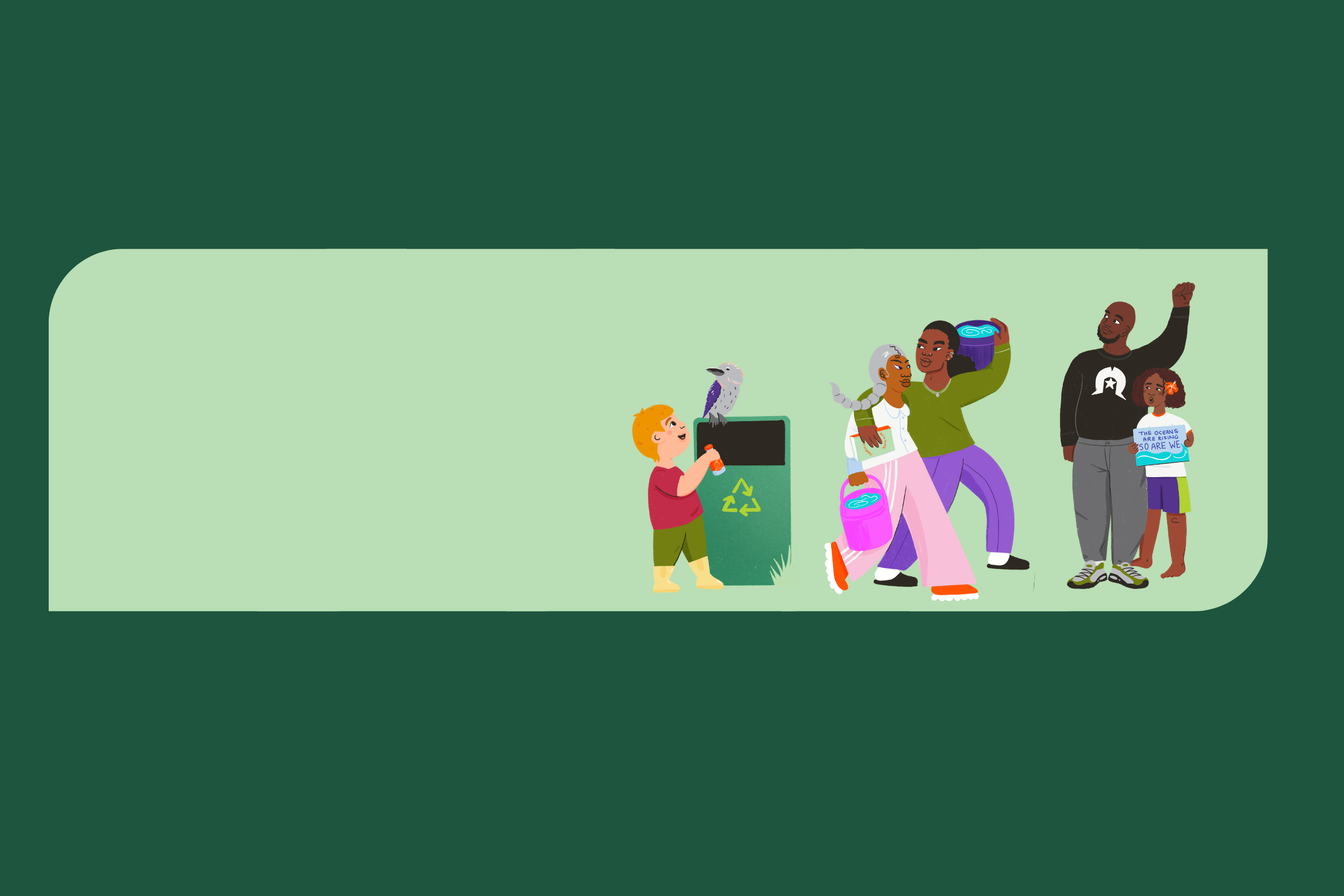
Have your say to build a fairer climate future
For too long, powerful corporations, lobby groups and individuals have benefited from a system they built. Let us imagine something new. Let us act with care and courage. And let us build a future for people, purpose and planet.

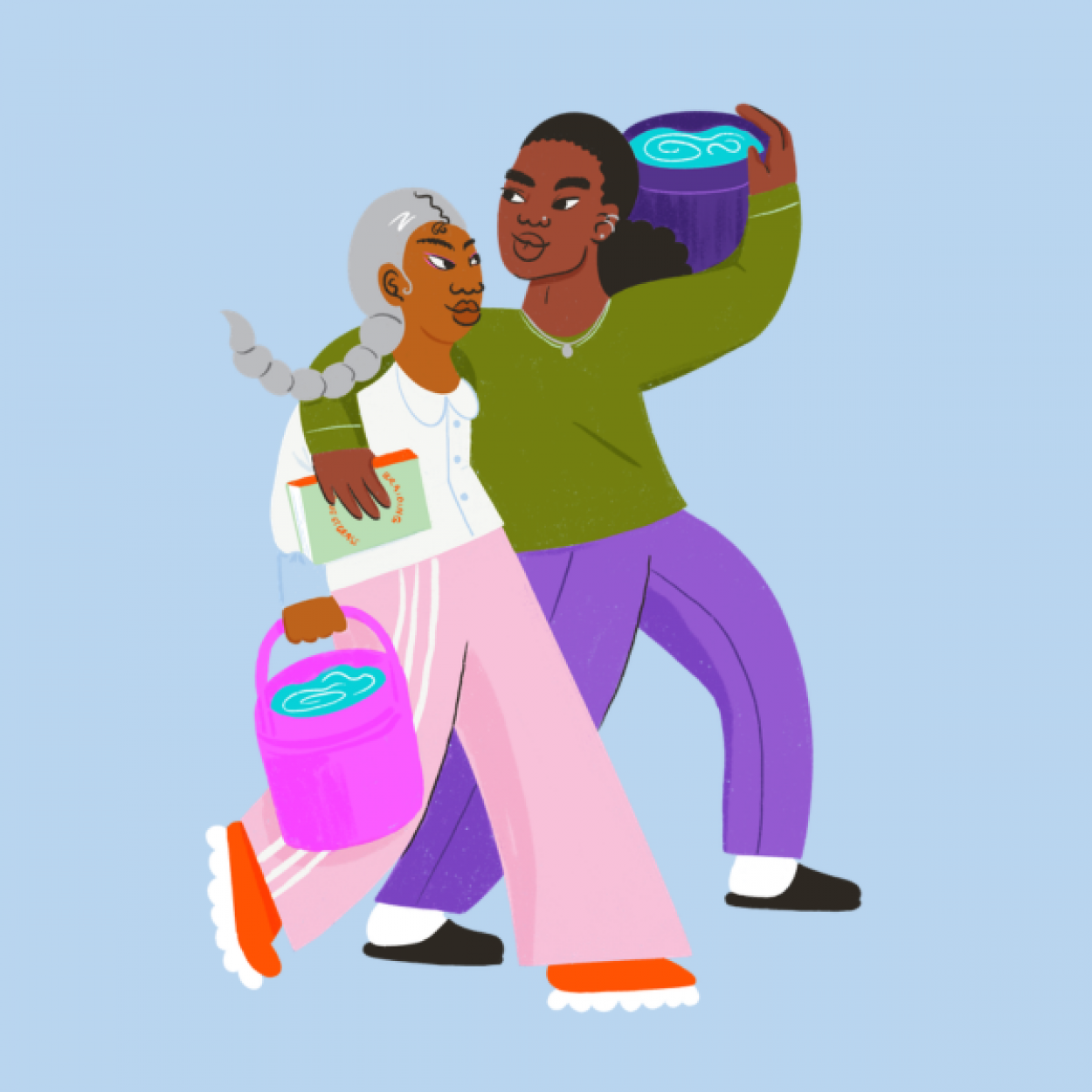
Illustrations by Ismawi Design